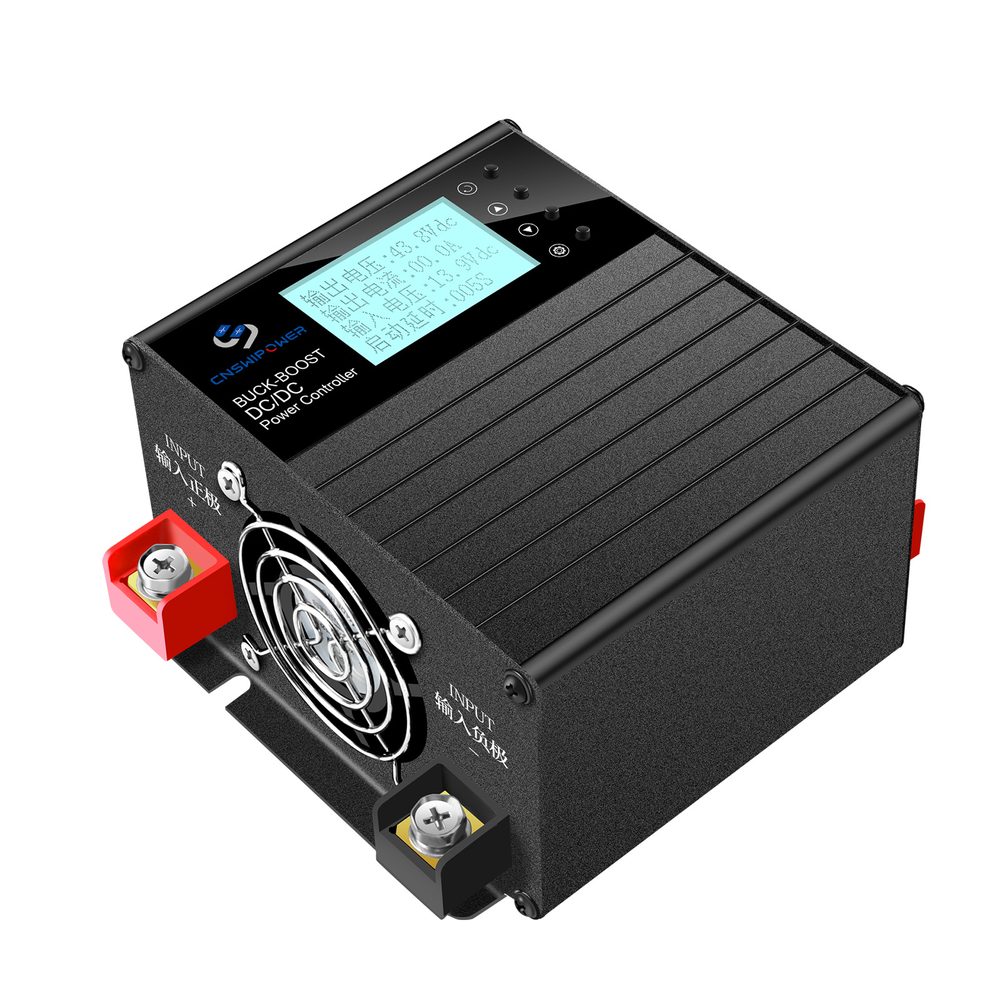
DC-DC charger 30A
375–450W, 50V or 75V version
Ask for price and datasheet
A DC-DC charger takes power from a vehicle's starter battery and alternator and charges a second battery at exactly the voltage and current that battery needs. Ours use a four-switch synchronous buck-boost design, so they keep charging whether the input is above, below or close to the output voltage.
Output voltage and current are adjustable, so one charger can serve 12V, 24V, 36V or 48V systems with lead-acid, LiFePO4 or NMC batteries. Every current rating comes in a 50V and a 75V version.
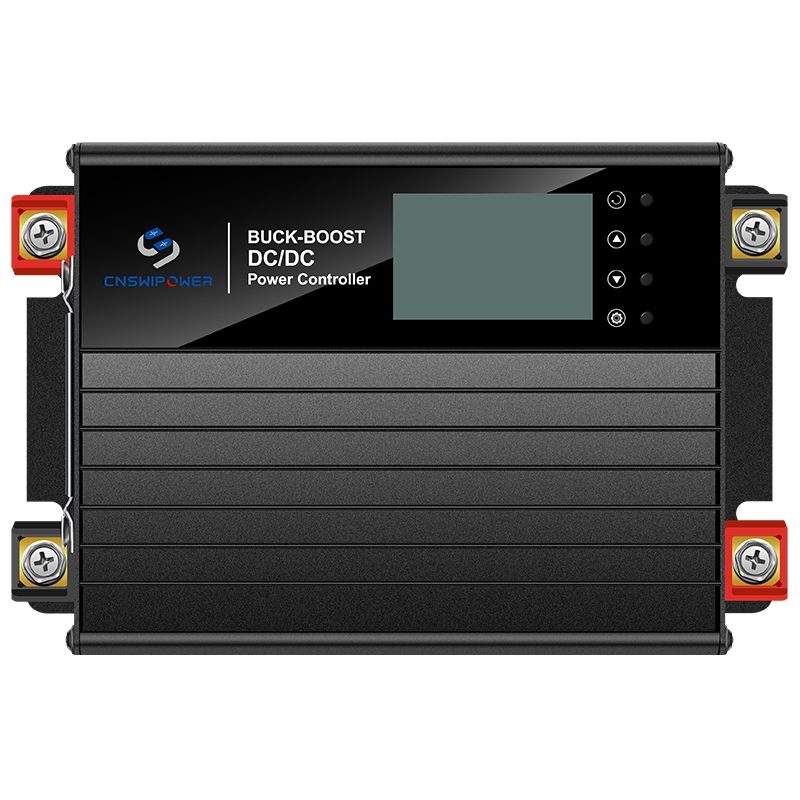
Steps up or down without a break, for example from a 12V vehicle to a 24V or 48V house battery.
Rated 375W to 1,500W; the maximum current applies to a 12V auxiliary battery.
The 75V version is needed for 48V and 51.2V batteries charged to 58.4V.
Adjustable start and shutdown input voltages, plus a 5–999 s start delay after the engine starts.
Shows output voltage and current, input voltage, temperature and faults; English or Chinese menu.
Fan on at 45°C, protective shutdown at 90°C, restart at 60°C or below.
| Model | Rated power | Max current, 12V battery | 24V battery | 48V battery |
|---|---|---|---|---|
| 30A | 375–450W | 30A | 15A | 7.5A |
| 60A | 750–900W | 60A | 30A | 15A |
| 100A | 1,250–1,500W | 100A | 50A | 25A |
The lower power rating applies with a 12V starter battery, the higher one with a 24V or 48V starter battery. Charging a 48V battery requires the 75V version.
| Specification | 50V version | 75V version |
|---|---|---|
| Input voltage range | 9–50V DC | 9–75V DC |
| Output voltage range | 3–50V DC | 3–75V DC |
| Under/over-voltage setting | 9–50V DC | 9–75V DC |
| Start delay | 5–999 s, default 60 s | 5–999 s, default 60 s |
| Thermal protection | Fan on at 45°C; shutdown at 90°C | Fan on at 45°C; shutdown at 90°C |
| Operating temperature | −30 to 85°C | −30 to 85°C |
| Battery | Nominal voltage | Charge voltage | Charger version |
|---|---|---|---|
| Lead-acid | 12V | 14.6V | 50V or 75V |
| Lead-acid | 24V | 29.2V | 50V or 75V |
| Lead-acid | 48V | 58.4V | 75V |
| LiFePO4 | 12.8V | 14.6V | 50V or 75V |
| LiFePO4 | 25.6V | 29.2V | 50V or 75V |
| LiFePO4 | 38.4V | 43.8V | 50V or 75V |
| LiFePO4 | 51.2V | 58.4V | 75V |
| NMC / Li-polymer | 14.8V | 16.8V | 50V or 75V |
| NMC / Li-polymer | 25.9V | 29.4V | 50V or 75V |
| NMC / Li-polymer | 51.8V | 58.8V | 75V |
Typical upper limits only. Final charge voltage, current and temperature limits must follow the battery manufacturer and BMS.
375–450W, 50V or 75V version
Ask for price and datasheet750–900W, 50V or 75V version
Ask for price and datasheet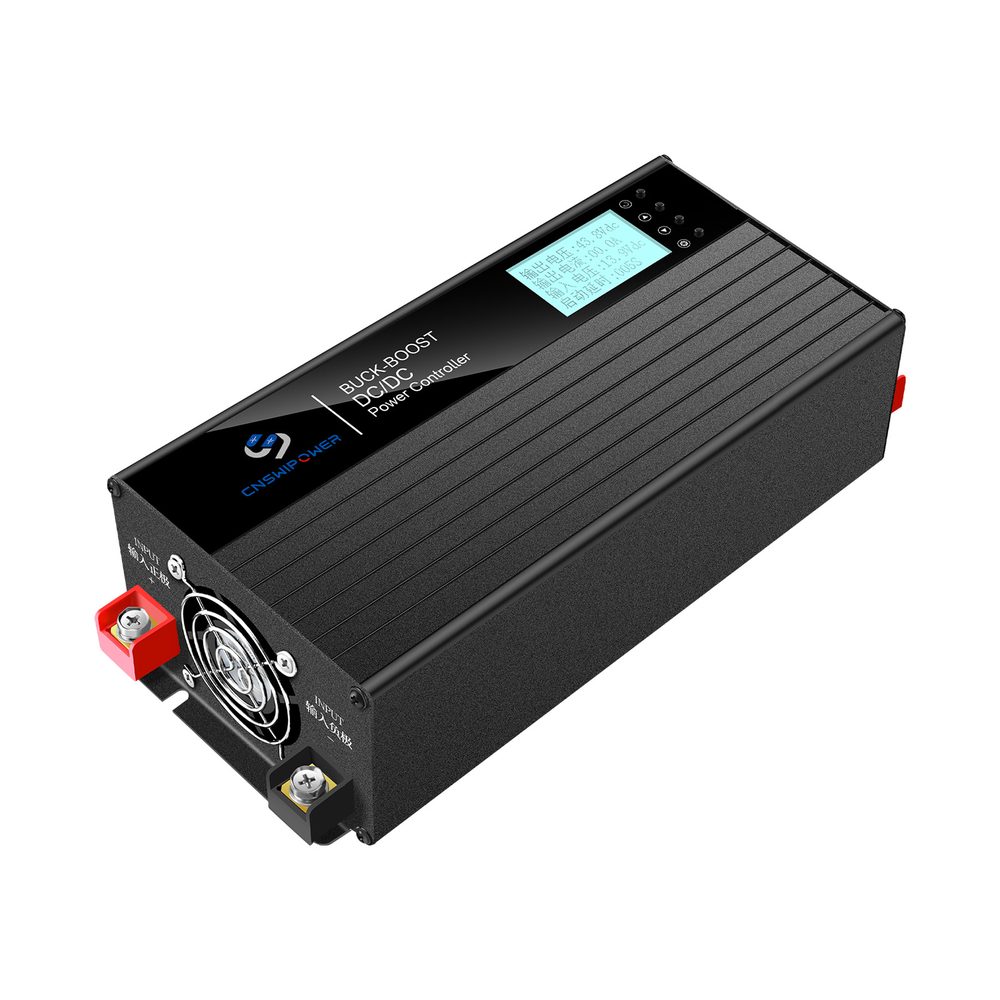
1,250–1,500W, 50V or 75V version
Ask for price and datasheetModern smart alternators lower their voltage once the starter battery is full, so a simple isolator or relay leaves the house battery undercharged. Lithium batteries also need a higher, precisely controlled charge voltage. A DC-DC charger fixes both: it boosts or bucks the alternator voltage to exactly what the house battery needs and limits current to protect the alternator.
Choose a charging current the battery accepts: roughly 0.2C for lead-acid, 0.3C for LiFePO4 and 0.5C for NMC, so about 30A for a 100Ah LiFePO4 battery. Then check the input side. Input current is higher than output current: charging at 29.2V and 20A is 584W, which with about 10% loss draws roughly 53.5A from a 12V starter battery.
Fit a correctly rated fuse or breaker close to both batteries. As a starting point, 10 AWG (8 mm²) cable suits 20–35A, 6 AWG (16 mm²) 60–100A and 4 AWG (25 mm²) 100–160A, adjusted for length, temperature and voltage drop. Install the charger in a dry, ventilated place away from water and dust.
Pair it with a pure sine wave inverter and a lithium battery for a complete RV or truck power system.
Yes. Output voltage is adjustable, so you set it to your battery's charge voltage. For 48V or 51.2V batteries charged to 58.4V, choose the 75V version.
It only runs while the input voltage is above the start voltage you set and stops below the shutdown voltage. A start delay of 5–999 seconds keeps it off until the engine is running.
Yes. Set the output to the battery maker's recommended charge voltage, typically 14.6V for a 12.8V battery, and a current within its permitted C-rate.
Power in equals power out plus losses. Charging a 24V battery at 20A takes about 584W, so a 12V input supplies around 50A or more.
Tell us the model, input and output voltage, quantity and destination. An engineer will reply with pricing and lead time.