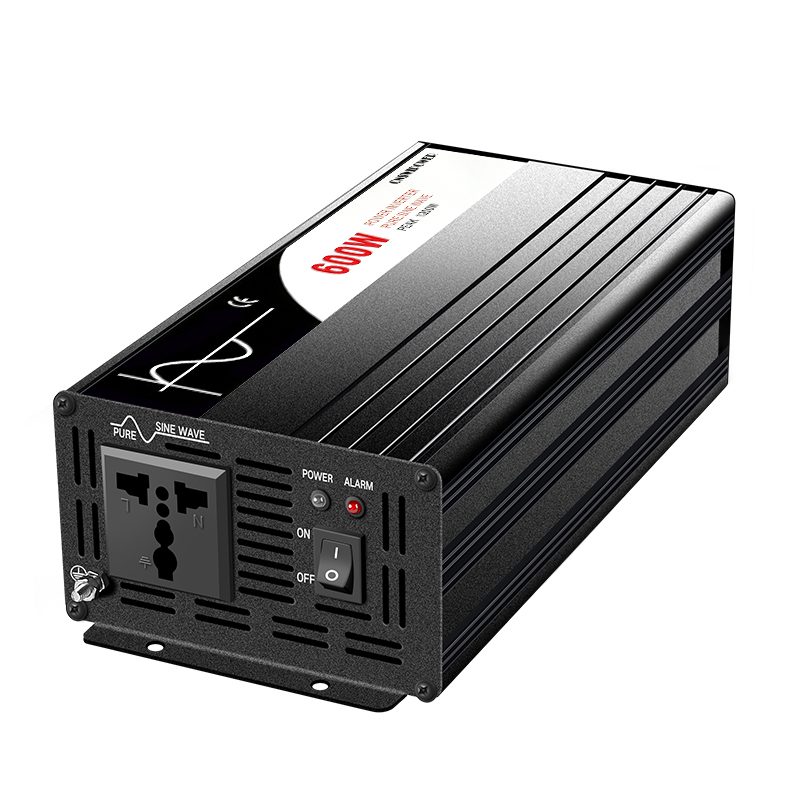
600W pure sine wave inverter
12–220V DC input
Ask for price and datasheet
Our SP series converts battery power into clean AC with the same waveform as the utility grid, so motors, compressors, chargers and sensitive electronics run the way they were designed to. Every model is built in our Jiashan factory and available with 12V, 24V or 48V DC input and 110/120V or 220/230V AC output.
Models from 600W to 5,000W are also available with 60V, 72V, 96V, 110V, 144V or 220V DC input, and the 3,000W, 4,000W and 5,000W models with 380V as well, for forklifts, electric vehicles, golf carts and industrial battery banks.
Advanced SPWM control produces a true sine wave for inductive and electronic loads.
Low no-load consumption keeps battery drain down when the inverter is idle.
Electrical isolation between DC input and AC output for a safer installation.
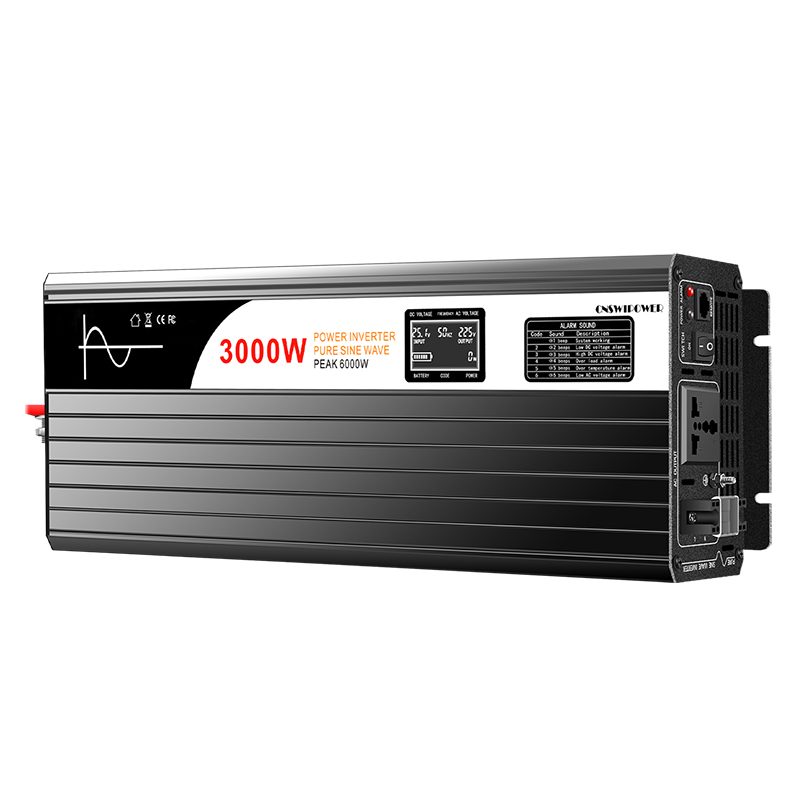
Shows DC voltage, AC voltage, frequency, battery level and load; alarm codes identify faults.
Input over/under-voltage, output overload and short circuit, over-temperature shutdown, temperature-controlled fan.
LCD models include a remote port so the inverter can be switched from a panel.
| Rated power | Standard DC input | High-voltage DC input | AC output | Notes |
|---|---|---|---|---|
| 600W | 12 / 24 / 48V | 60 / 72 / 96 / 110 / 144 / 220V | 110/120V or 220/230V | Compact, for electronics and small appliances |
| 1,000W | 12 / 24 / 48V | 60 / 72 / 96 / 110 / 144 / 220V | 110/120V or 220/230V | TVs, laptops, fans, small tools |
| 1,500W | 12 / 24 / 48V | 60 / 72 / 96 / 110 / 144 / 220V | 110/120V or 220/230V | 3,000W peak; LCD display |
| 2,000W | 12 / 24 / 48V | 60 / 72 / 96 / 110 / 144 / 220V | 110/120V or 220/230V | Fridges, microwaves, coffee machines |
| 2,500W | 12 / 24 / 48V | 60 / 72 / 96 / 110 / 144 / 220V | 110/120V or 220/230V | Microwaves, power tools, small pumps |
| 3,000W | 12 / 24 / 48V | 60 / 72 / 96 / 110 / 144 / 220 / 380V | 110/120V or 220/230V | Larger tools and appliances |
| 4,000W | 12 / 24 / 48V | 60 / 72 / 96 / 110 / 144 / 220 / 380V | 110/120V or 220/230V | Air conditioners and power tools |
| 5,000W | 12 / 24 / 48V | 60 / 72 / 96 / 110 / 144 / 220 / 380V | 110V or 220V | Models SP5000-12/24/48-110/220 |
| 6,000W | 12 / 24 / 48V | On request | 110/120V or 220/230V | Largest SP model; 24V or 48V recommended |
Full datasheets with dimensions, weight and certification details are available on request.
12–220V DC input
Ask for price and datasheet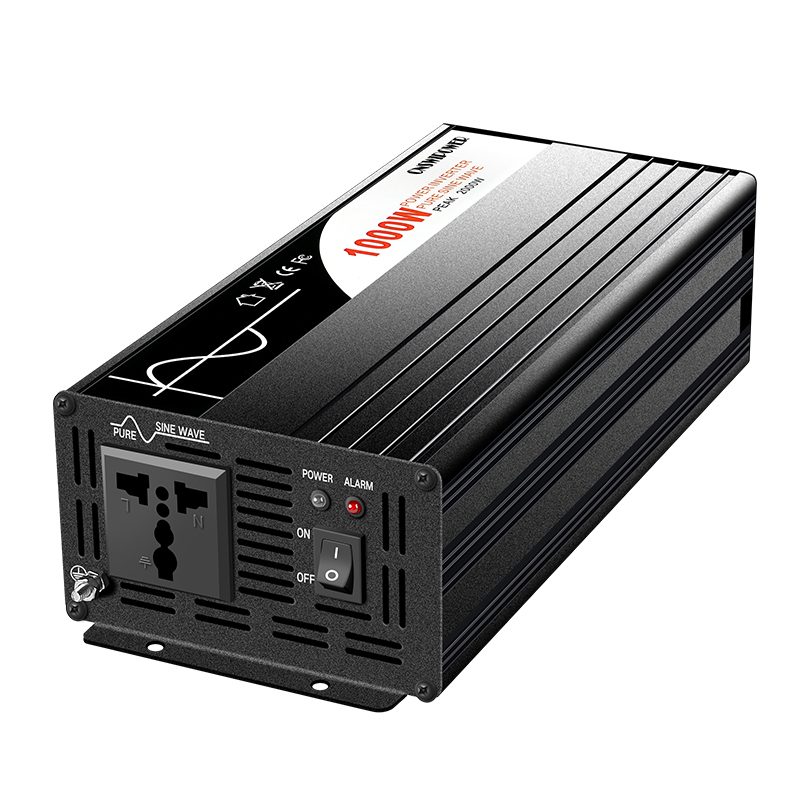
12–220V DC input
Ask for price and datasheet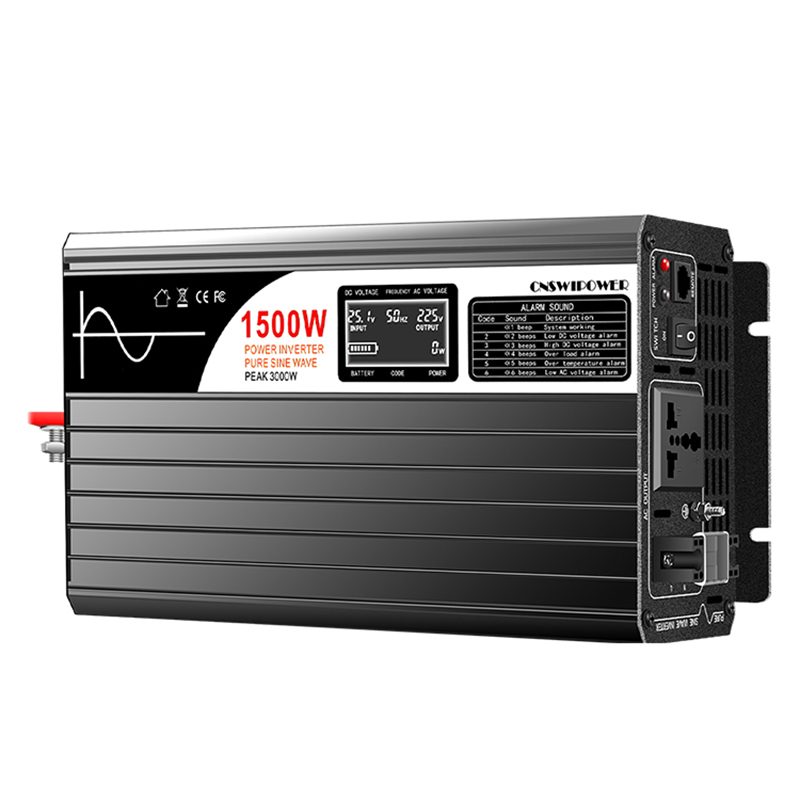
12–220V DC input, 3000W peak
Ask for price and datasheet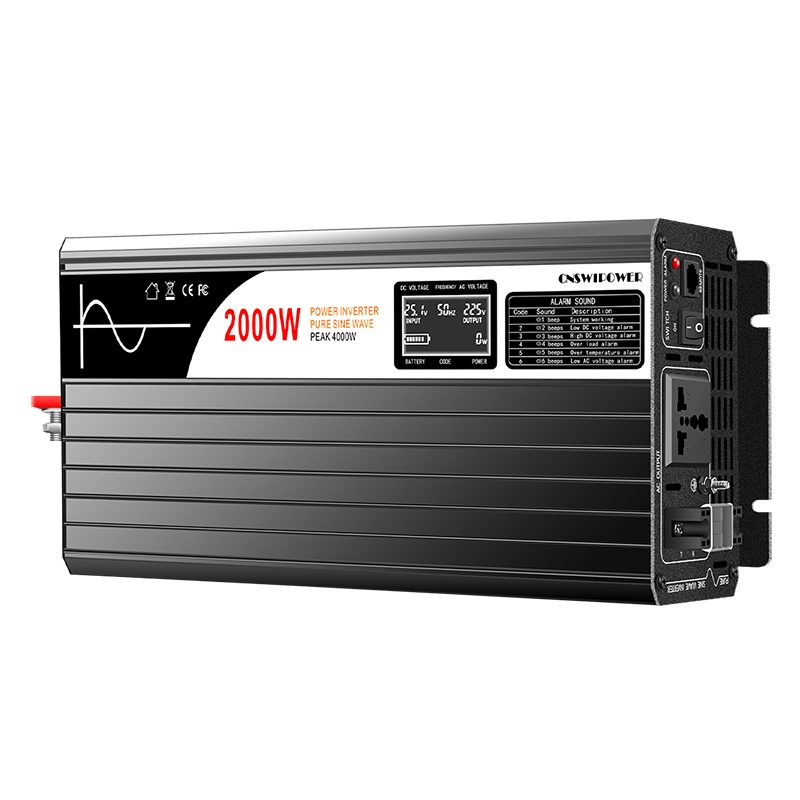
12–220V DC input
Ask for price and datasheet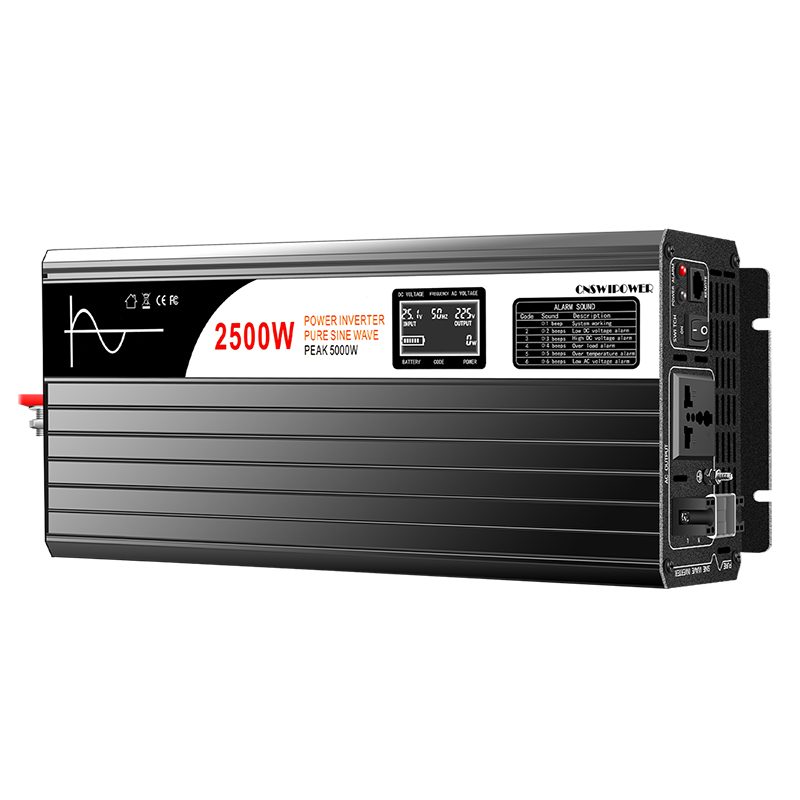
12–220V DC input
Ask for price and datasheet12–380V DC input
Ask for price and datasheet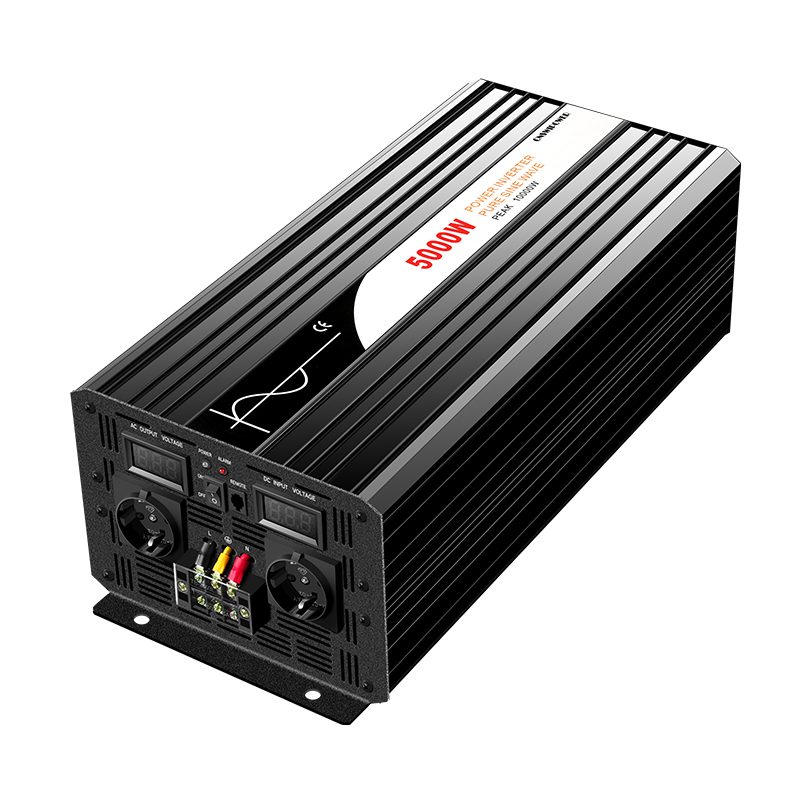
12–380V DC input, SP5000 series
Ask for price and datasheet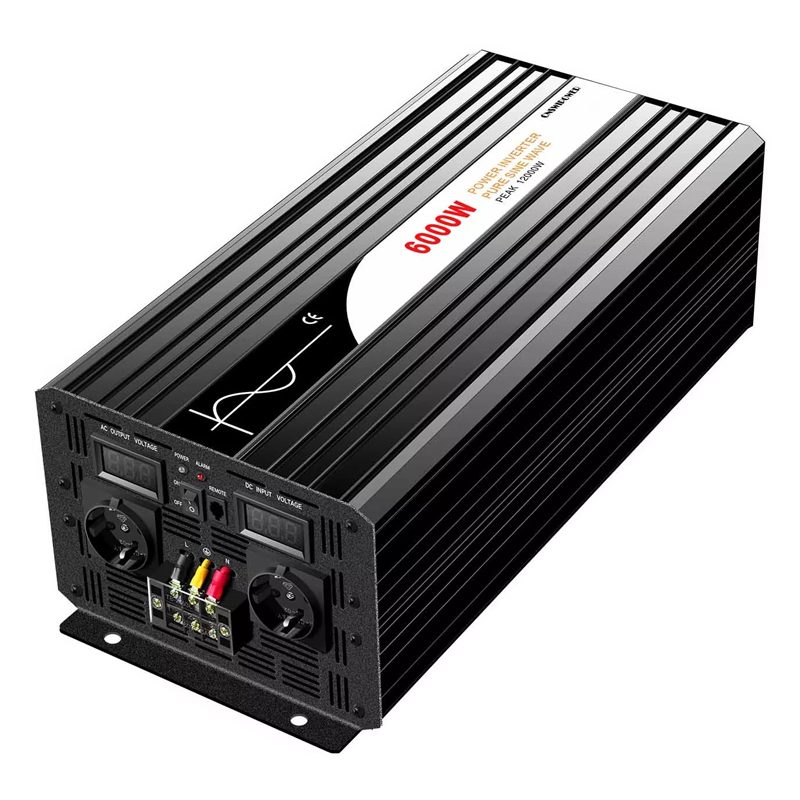
12/24/48V DC input
Ask for price and datasheetStart with continuous load, then check surge. Add up the watts of everything that will run at the same time and choose an inverter rated at least 20–30% above that figure. Motors and compressors (fridges, pumps, air conditioners, power tools) draw two to three times their running power for a moment at start-up, so the inverter's peak rating must cover that surge. Our 1,500W model, for example, is rated 3,000W peak.
Match battery voltage to power. The higher the power, the more it pays to move up from 12V. A 3,000W inverter at full load draws roughly 280A from a 12V battery but only about 70A at 48V, which means thinner cables, lower losses and less heat. As a rule of thumb, 12V suits up to about 2,000W, 24V up to 3,000–4,000W, and 48V above that. Our 12V vs 24V vs 48V guide goes into the details.
Choose output voltage and frequency for the market. North American and Japanese buyers typically need 110/120V output; Europe, Australia, Africa and most of Asia use 220/230V. Tell us the destination market and outlet type for OEM orders.
A modified sine wave inverter approximates AC with square steps. It is cheaper, but induction motors run hotter and noisier, some chargers and medical devices refuse to work, and audio equipment hums. A pure sine wave inverter avoids those problems, which is why RV builders, marine installers and solar integrators specify it as standard. Read the full comparison in pure sine wave vs modified sine wave.
Yes. Size the inverter for the start-up surge: a household fridge usually needs a 1,000–2,000W model, and a 1,000W microwave typically draws about 1,500W from the inverter, so a 2,000W unit or larger is a safe choice.
24V or 48V is recommended. At 12V a 3,000W inverter can draw close to 300A, which needs very heavy cables and a large battery bank.
Yes. Besides standard 12/24/48V input, the 600W–5,000W models come in 60V, 72V, 96V, 110V, 144V and 220V DC versions, and the 3,000W–5,000W models also in 380V, 110/120V or 220/230V output, and private-label housings and packaging for distributors.
Yes. Send us the model, voltage and quantity and we will quote sample and bulk pricing together.
Tell us the model, input and output voltage, quantity and destination. An engineer will reply with pricing and lead time.